Way to Alaska: A Vintage Font Collection for Timeless Projects
There’s a certain magic in old hand-painted signs—the slight imperfections, the bold character, the sense of a story behind the letters. That’s the feeling Way to Alaska captures so well. This isn’t just another premium font; it’s a carefully curated collection inspired by vintage signboards, labels, and banners. For designers, entrepreneurs, and creators, it offers a direct path to that authentic, weathered aesthetic without needing to hunt for actual relics.
More Than a Single Typeface: A Suite of Styles
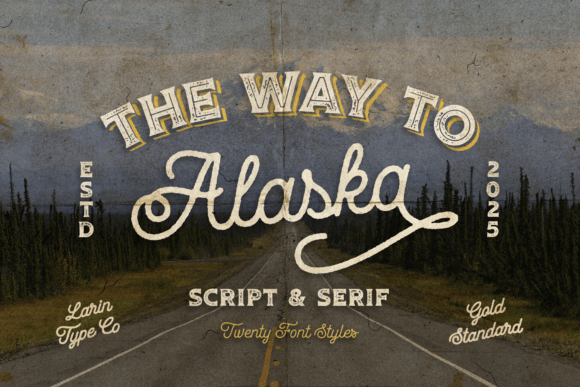
The real strength of Way to Alaska lies in its depth. The collection includes 20 distinct font styles, divided into two core families: a robust serif font and an elegant script font. This structure provides incredible versatility. You’re not just getting one look; you’re getting a complete toolkit for building cohesive brand identity systems or multi-layered design projects.
The serif family is a workhorse with personality. It includes a standard Regular, a textured Rough, a detailed Inline, and combinations like Inline Rough. For projects needing a tactile feel, the Stamp and Halftone styles add instant grit and character. The Inline Halftone and Inline Stamp variations offer even more nuanced options, while the Shadow style provides built-in depth. Each of these creative font styles can stand alone or be used together to create visual interest and hierarchy within a single layout.
The script side complements the serif perfectly. With Regular, Rough, Stamp, and Halftone versions, it maintains the same vintage voice but with a more personal, handwritten flow. The dedicated script font adds four more styles—Regular, Rough, Bold, and Bold Rough—and is packed with alternates for both uppercase and lowercase letters. This allows you to customize the look of your text extensively, avoiding the repetitive, cookie-cutter appearance that can sometimes plague script fonts.
Where This Font Truly Shines
Think about projects where authenticity and character are non-negotiable. Way to Alaska excels in logo design for brands that want to convey heritage, craftsmanship, or a rugged, independent spirit. Imagine it on a craft brewery label, a boutique coffee bag, or the masthead of an outdoor adventure blog. Its visual weight and texture make it an immediate statement piece.
In packaging design, the various styles become practical tools. Use the bold serif for the product name, the script for a tagline, and the rough or stamp version for smaller text that needs to feel integrated and tactile. For editorial design, like magazine features or book covers on historical or travel themes, it sets a compelling mood. The halftone and inline variants are particularly useful for adding subtle texture to headlines without overwhelming the page.
Digital applications are equally strong. This display font grabs attention in web design hero sections, in social media graphics where stopping the scroll is key, or in email headers that need to feel special. For entrepreneurs, it’s a powerful asset for creating branded merchandise, from T-shirts to posters, that feels genuinely vintage rather than digitally imitated. Even for personal projects like scrapbooking, wedding invitations, or DIY crafts, it adds a professional, polished touch that elevates the final product.
Making It Work: Practical Guidance for Your Project
Choosing a creative font like this is about more than just liking how it looks. It’s about evaluating its fit. Ask yourself: does the personality of Way to Alaska align with my project’s voice? If you’re designing for a modern tech startup, it might clash. But if you’re working for a artisan food brand, a vintage clothing line, or a travel company, it could be the perfect match. Its strength is in conveying a specific, nostalgic tone.
One of the most important steps is testing font pairing. A strong, textured display font like this needs balance. Pair it with a clean, simple sans serif font for body text to ensure readability. The contrast will let the headline font shine while keeping longer passages of text easy to read. For example, the bold, characterful serif of Way to Alaska for a heading paired with a neutral sans serif for paragraphs creates a clear and professional visual hierarchy.
Take full advantage of the included styles. Don’t just use the Regular version. Experiment with the Rough for a more distressed look, the Inline for added detail, or the Stamp for a printed, ink-on-paper effect. The alternates in the script fonts are gold for customization—swapping out letterforms can make your text feel more unique and handcrafted. Always test your chosen style at the actual size it will be used, especially for smaller text in print design or digital interfaces, to ensure the details remain clear and readability is maintained.
Finally, review the licensing for your intended use. As a commercial font, it’s essential to understand the terms for your specific project, whether it’s for a client, a product for sale, or your own business materials. Proper licensing is a cornerstone of professional practice and protects both you and the font creator.
In the end, Way to Alaska is more than a collection of design assets. It’s a gateway to a specific aesthetic, offering designers and creators a versatile, high-quality toolkit for projects that demand character, history, and a touch of handmade charm. Its value lies in its ability to tell a visual story before a single word is read.