Build Something Beautiful with Hand Tools
There’s a certain honesty in a well-worn wrench or a freshly sharpened chisel. These objects aren’t just tools; they’re extensions of the maker’s intent, symbols of a job done right. Capturing that spirit in design is where the Hand Tools typeface comes in. This isn’t your average set of dingbats. It’s a comprehensive collection of icons that feels less like a font and more like a visual workshop, ready to add character and authenticity to any project that celebrates craftsmanship.
More Than Icons: The Personality of the Hand Tools Typeface
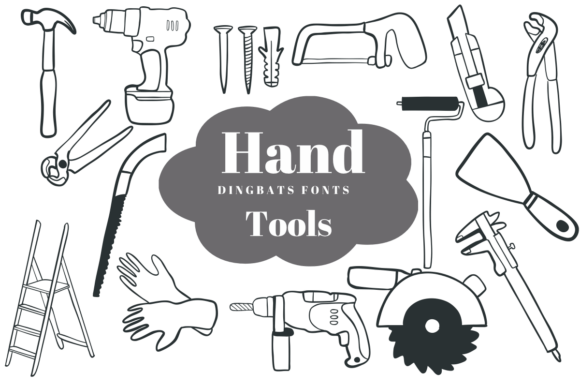
At its core, the Hand Tools font is a curated set of symbols. You’ll find hammers, drills, saws, wrenches, calipers, and pliers, all rendered with a clean, illustrative style. The appeal lies in its consistency and personality. Each icon shares a similar line weight and level of detail, which is crucial. When you use these symbols together, they create a cohesive visual language rather than looking like a random assortment of clip art. The style is bold and graphic, perfect for making a clear statement without overwhelming a layout. It carries a blue-collar, hands-on aesthetic that instantly communicates ideas of construction, repair, and creation.
This visual toolkit speaks directly to the DIY culture. It’s for the woodworker in their garage, the mechanic in the shop, the designer crafting a brand for a local hardware store. The icons have a friendly, approachable quality—they’re not cold or overly technical. This makes the Hand Tools typeface incredibly versatile. It can feel rugged and industrial for a construction company logo, or charming and nostalgic for a craft brewery’s packaging. That emotional range is what sets a great premium font apart.
Where This Creative Font Truly Shines
Understanding where to deploy a display font like this is key to its success. Its strength isn’t in body text, but in headlines, logos, and accent elements where personality needs to punch through. Think of it as a specialist tool in your design kit.
Branding & Logo Design: This is a natural home. For businesses in the home improvement, construction, artisan, or maker space, the Hand Tools font can become a central part of their brand identity. A hammer icon can replace a letter in a logo, or a set of tools can create a dynamic emblem. It immediately tells customers what the brand is about. It works beautifully for hardware store branding, workshop flyers, and construction company logos, reinforcing a hard-working, reliable image.
Editorial & Publishing: In magazines, blogs, or “How-To” guides, these icons are invaluable. Use them as bullet points in a listicle about workshop safety, as section dividers in a DIY tutorial, or as spot illustrations in the margins. They add visual interest and break up text, improving readability and engagement. They turn a standard article into an informative, illustrated guide.
Digital & Web Design: On websites and social media, the Hand Tools typeface can guide the user experience. Use icons for service menu items (“Repair,” “Build,” “Customize”), as engaging social media post graphics, or as part of a cohesive set of website icons. It helps create a memorable and thematic web design that stands out from generic templates.
Packaging & Print: Imagine a craft coffee bag with a small gear icon, or a barbecue sauce label with a tongs symbol. These subtle touches add depth and storytelling. For packaging design, the font can highlight product features, create patterns on boxes, or simply add a artisanal stamp of quality. It’s a detail that elevates the entire product experience.
Integrating Hand Tools into Your Design Workflow
Adding a new creative font to your toolkit is exciting, but a strategic approach ensures it enhances, rather than clutters, your work. Start by evaluating the project’s voice. Is it serious and industrial, or friendly and community-focused? The Hand Tools typeface can adapt, but your usage should align with the core message. For a formal brand, use icons sparingly as accents. For a playful DIY blog, they can be more prominent.
Pairing is everything. This typeface is bold and graphic, so it needs a partner that doesn’t compete. It pairs exceptionally well with clean, sturdy sans serif font families for a modern, approachable look. For a more traditional, “hard-working” aesthetic, try it with a bold, industrial slab serif font. The contrast between the illustrative icons and a structured text font creates a strong visual hierarchy. Avoid pairing it with other highly decorative or script font styles, which can create visual chaos.
Practical considerations matter. Review the full character map. Does it include all the symbols you anticipate needing? Check the licensing. For any commercial project—whether it’s a client logo, a product you sell, or a monetized blog—you need to ensure you have the proper commercial font license. Finally, test it. Mock up a logo, a flyer, or a social media post. See how the icons look at different sizes. Do they remain clear and recognizable when small? This hands-on testing is the best way to confirm the font is the right fit for your specific needs. The goal is to use these beautiful symbols to build something that resonates, creating a connection with an audience that values skill, effort, and authenticity.