Vintage Rhyme: A Serif Font for Organic Design
Understanding the Visual Character of Vintage Rhyme
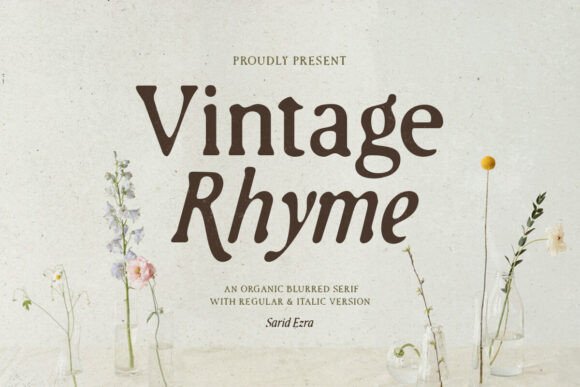
When you first look at Vintage Rhyme, you notice it doesn't have the sharp, crisp edges you'd expect from a typical serif font. The letterforms carry a natural softness—almost like ink that's bled slightly into textured paper. This organic quality is what makes it stand out. The serifs are present but not aggressive, giving each character a grounded, familiar feel without appearing dated or overly formal.
What I appreciate about this typeface is how it manages to feel both classic and approachable at the same time. The slightly blurred edges create warmth. There's a handmade quality embedded in the design that digital fonts often lack. It's not trying to replicate calligraphy or mimic a hand-lettered look—it's something different. The letter shapes are rooted in traditional serif construction, but the execution feels relaxed and lived-in.
Both the regular and italic versions share this personality, though the italic brings a subtle forward lean that adds movement and emphasis. Used together, they create a natural hierarchy that feels effortless. You're not fighting the typeface to make it work—it cooperates with your layout in a way that feels intuitive.
Where Vintage Rhyme Works Best
I've seen this font used across a surprisingly wide range of projects, and it holds up well in most of them. Wedding invitations are an obvious fit—the organic softness pairs beautifully with romantic themes, floral motifs, and textured cardstock. But don't stop there. Vintage Rhyme works equally well for logo design, especially for brands that want to communicate authenticity, warmth, or a connection to craftsmanship.
Think about small-batch food brands, independent bookshops, artisan bakeries, or boutique hotels. These businesses often need a serif font that doesn't feel corporate or cold. Vintage Rhyme fills that space nicely. It signals quality and care without the stiffness of a traditional display font.
For editorial design and packaging design, the font performs well at larger sizes where its organic details can breathe. Pull quotes, chapter headings, product names, and taglines all benefit from that slightly imperfect texture. At smaller sizes, the regular weight remains legible for body text, though I'd recommend testing it at your intended output size before committing.
Digital applications deserve attention too. Social media graphics built with Vintage Rhyme tend to stop the scroll—the font has enough personality to stand alone without heavy design elements around it. Blog headers, email newsletters, and website hero sections can all leverage its natural charm. The font supports multiple languages, which makes it practical for international projects or multilingual brands.
How Font Choice Shapes Brand Perception
Every typeface carries associations. When someone encounters your brand for the first time, the font you've chosen is doing quiet work in the background—setting expectations, building trust, creating emotional resonance. Vintage Rhyme communicates something specific: that the person or brand behind the design values authenticity over perfection.
This matters more than many people realize. A brand identity built on a premium font with genuine character feels more memorable than one relying on overused system fonts. The slight organic irregularity in Vintage Rhyme's letterforms gives your design assets a distinctive voice. It's not shouting for attention—it's drawing people in with quiet confidence.
Readability plays a role here too. The font's gentle curves and moderate contrast make it comfortable to read in short to medium-length passages. For web design, this means headlines and introductory paragraphs work well. For print, you have more flexibility—brochures, business cards, menus, and catalogs can all benefit from its warmth.
Practical Tips for Working with Vintage Rhyme
Before you commit to any creative font, test it in context. Set your actual content—not just "Lorem ipsum"—and evaluate how it looks at the sizes you'll use most. With Vintage Rhyme, pay attention to how the organic texture reads at different scales. At large display sizes, the character really shines. At very small sizes, you might find a cleaner sans serif font works better for body copy beneath it.
Font pairing is where you can have real fun. Because Vintage Rhyme has such a distinct personality, it benefits from a simpler companion. A clean geometric sans serif creates an appealing contrast. A subtle handwritten font or script font can complement it for accent text, though be careful not to crowd the design with too many expressive typefaces competing for attention.
Check what's included before you start. Vintage Rhyme comes in regular and italic versions, which gives you enough variation for most projects. Use the italic for emphasis, subtitles, or quoted text. The regular weight handles everything else. Understanding these included styles upfront saves time during production.
Licensing matters for commercial use. If you're designing for a client, a product, or any revenue-generating project, confirm the font's license covers your intended application. Most commercial font licenses are straightforward, but it's worth verifying before you build a brand identity around a typeface you might not have rights to use commercially.
Finally, trust your eye. Typography is as much instinct as it is technique. Set your headlines, review your layouts on different screens and in print proofs, and ask yourself whether the font supports the message. With Vintage Rhyme, the answer is usually yes—especially when your project calls for something with genuine warmth and character that doesn't feel manufactured.