Melon Honey: A Blackletter Font for Bold Branding
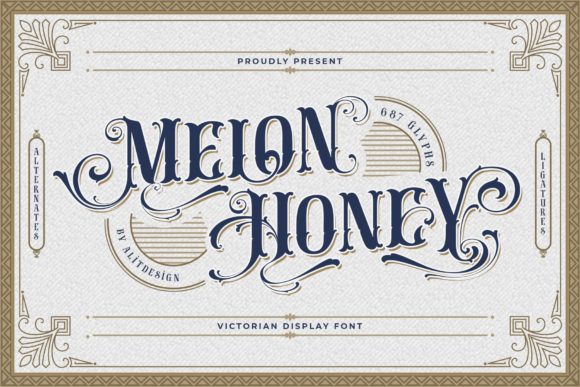
Certain projects demand a typeface that does more than simply convey words; they require a font that commands attention and sets a distinct mood. Melon Honey is precisely that kind of design asset. It is a highly detailed blackletter font, a style historically associated with authority, tradition, and craftsmanship. This particular premium font modernizes the blackletter aesthetic, offering intricate letterforms that are both decorative and powerful. Its gothic-inspired roots give it a unique personality that can instantly elevate a design from ordinary to memorable.
The visual character of Melon Honey is defined by its sharp, angular strokes and ornate details. Unlike a standard serif font or a clean sans serif font, this typeface features the dramatic thick and thin lines characteristic of blackletter styles. Each letterform is carefully constructed, with swashes and glyphs that add a layer of sophistication. This isn't a simple script font; it's a display font built for impact. Its intricate style makes it a standout choice for designers looking to incorporate a sense of heritage or edgy elegance into their work. The font’s personality is assertive, traditional, and unapologetically detailed, making it ideal for projects where a strong first impression is non-negotiable.
Strategic Applications for a Distinctive Typeface
Understanding where a font like Melon Honey excels is key to using it effectively. Its strength lies in applications where it can be showcased at larger sizes, allowing its detailed craftsmanship to shine. Think of it as the headline act, not the supporting player in body text. In branding and logo design, Melon Honey can form the cornerstone of a powerful brand identity for businesses that want to project strength, tradition, or a unique, artisanal quality. This could be a craft brewery, a high-end barbershop, a bespoke tailor, or a luxury goods brand. The font’s inherent character helps build immediate recognition and sets a specific tone that resonates with a target audience.
Beyond logos, its applications are vast across both digital and print landscapes. For editorial design, consider using Melon Honey for magazine mastheads, chapter titles, or pull quotes to add a dramatic flair. In packaging design, it can make a product stand out on a crowded shelf, suggesting quality and a rich backstory. Digital applications are just as compelling. This creative font can be a powerful tool for social media graphics, creating scroll-stopping posts, event announcements, or stylized quotes. For web design, it’s best reserved for hero sections, impactful H1 headings, or special promotional banners where a touch of modern typography with a classic edge is needed.
A Practical Guide to Pairing and Implementation
A font with as much personality as Melon Honey requires a thoughtful approach to implementation. Its complexity means it must be balanced with simpler elements to ensure overall readability. The most effective strategy is font pairing. Because Melon Honey is a highly stylized display font, it pairs exceptionally well with a clean, neutral sans serif font for body text. A typeface like Lato, Open Sans, or Montserrat provides a clear, legible counterpoint that doesn’t compete for attention. This contrast creates a strong visual hierarchy, guiding the reader’s eye naturally from the impactful headline to the supporting content. Avoid pairing it with other decorative fonts, such as an ornate script font, as this can lead to a cluttered and confusing design.
Before committing to a project, it’s wise to test how the font performs in your specific context. Consider the following:
- Readability at Size: While beautiful, blackletter fonts can be challenging to read at very small sizes. Use Melon Honey for headlines and short, impactful text, not for long paragraphs or fine print.
- Contextual Fit: Does the historical or gothic feel of the font align with your project’s message? It’s a perfect fit for a traditional pub’s branding but might feel out of place for a modern tech startup.
- Explore the Glyphs: As a PUA encoded font, Melon Honey includes a wealth of alternate characters and swashes. Take the time to explore these in your design software to customize letterforms and add unique flair to your typography.
Unlocking the Full Potential of Your Design Asset
One of the most significant advantages of using a premium font like Melon Honey is the breadth of its character set. The fact that it is PUA encoded is a critical feature for designers. PUA, or Private Use Area, encoding means that all the special characters, ligatures, and swashes are easily accessible through standard software, even programs that don’t have advanced OpenType features. You can typically access these glyphs through a character map or a dedicated panel in your design application. This accessibility empowers you to move beyond the basic alphabet and truly customize your lettering, creating logos and headlines that are uniquely yours.
When evaluating this or any commercial font, always review the licensing terms. A font license for a commercial project may differ from one for personal use. Ensure the license covers your intended applications, whether it’s for a client’s logo, merchandise, or a website. Using a properly licensed typeface is a mark of professionalism and protects both you and your client. By treating Melon Honey as one of your core design assets, you can consistently apply it across various brand touchpoints—from business cards and letterheads to social media profiles and website headers—to build a cohesive and recognizable brand identity. Its unique style ensures that any project it graces will carry a distinctive and confident voice.