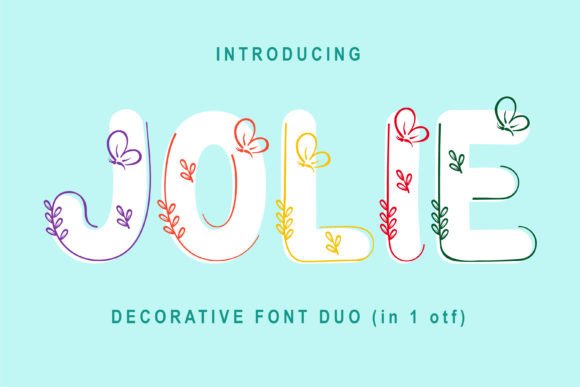
Jolie: Crafting Warmth and Style with This Layered Font
In the crowded world of digital assets, finding a typeface that feels genuinely unique is a rare treat. You have likely scrolled through endless lists of sans serif fonts and serif fonts that, while functional, lack a distinct personality. Then, you stumble upon something like Jolie. It is not just another display font; it is a statement piece designed to bring a specific kind of energy to your work. As a designer, you know that typography is voice. When you choose Jolie, you are choosing a voice that is playful, layered, and undeniably cute, yet sophisticated enough for commercial applications.
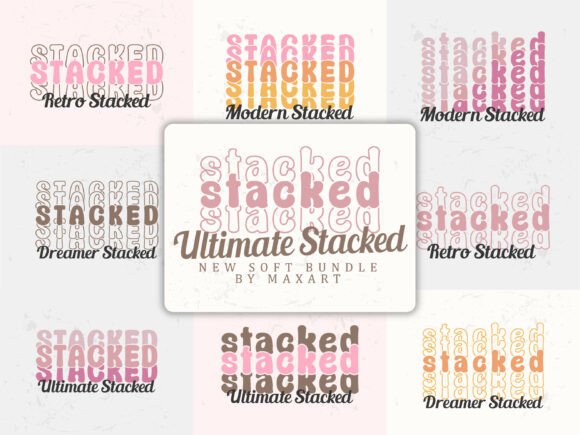
At its core, Jolie is a decorative layered font that plays with depth and dimension. The concept relies on a smart use of capitalization to manage visual complexity. The uppercase letters serve as the sturdy, solid base of your design. They provide the structure and the primary visual weight. However, the magic happens when you switch to lowercase. The lowercase characters in Jolie are where the "cute" and "decorative" elements live. They are designed to layer on top of that uppercase base, creating a shadow effect, a texture, or an ornamental flourish without requiring you to manually align multiple text boxes in Adobe Illustrator or Photoshop.
Why the Layered Approach Changes Everything
If you have worked with standard script fonts or handwritten fonts before, you know the frustration of flat text. It can sometimes look lost on a busy background or feel too thin to stand out as a logo design element. Jolie solves this by allowing you to build a visual hierarchy within a single word. By typing your header in uppercase and then applying the decorative lowercase layer, you instantly create a rich, textured look. This is particularly useful for brand identity projects where the client wants a logo that feels "finished" and premium without being overly corporate.
Consider the practical application for a small business owner. Perhaps you are designing a label for artisanal jam or a header for a wedding invitation. A standard sans serif font might feel too cold. A standard script font might be hard to read at small sizes. Jolie offers a middle ground. It has the warmth of a handwritten font but the structural integrity of a bold display font. Because the layers are built into the font file, you maintain consistency across all your materials. You do not have to worry about the "shadow" layer moving slightly on different print runs, which is a common headache in packaging design.
Real-World Applications: Where Jolie Shines
The versatility of this creative font is impressive. While it is clearly a decorative tool, it adapts well to various mediums if used thoughtfully.
- Social Media Graphics: In the fast-scrolling environment of Instagram or TikTok, you have milliseconds to grab attention. The bold, layered nature of Jolie stops the thumb. It works exceptionally well for sale announcements, podcast covers, or quote graphics where the text itself is the main visual attraction.
- Editorial Design: While you would not use this for body text (please, save your readers' eyes), it is a fantastic choice for pull quotes or feature headers in a magazine layout. It adds a touch of personality that breaks up the monotony of standard editorial design grids.
- Web Design: Hero sections on websites need impact. Using Jolie for a headline can set the tone immediately for lifestyle blogs, creative agencies, or boutique e-commerce stores. It signals to the visitor that the brand is approachable and style-conscious.
However, context is everything. As a professional, you must evaluate the fit. Jolie is not the right choice for a law firm's annual report or a medical instruction manual. Its personality is too strong for highly technical or serious content. But for a bakery, a fashion boutique, a children's brand, or a personal blog, it is an excellent fit. It bridges the gap between professional marketing assets and personal creative projects like scrapbooking or planner decoration.
Mastering the Pairing and Readability
One of the most common questions regarding decorative fonts is, "What do I pair it with?" Because Jolie has so much character, it demands a quiet partner. If you try to pair it with another ornate serif font or a complex script font, the result will be visual chaos. The eyes will not know where to look.
The best approach is contrast. Since Jolie is decorative and often implies a handcrafted aesthetic, pair it with a clean, geometric sans serif font. Think of fonts like Montserrat, Lato, or Open Sans. These neutral typefaces provide the breathing room that Jolie needs to shine. Use the sans serif for your subheadings and body copy to ensure readability, and reserve Jolie for the moments where you want to inject energy and fun.
When testing your font pairing, pay attention to weight and scale. Because the layered effect adds visual bulk to the letters, you might find that Jolie appears larger than a standard font at the same point size. You may need to scale it down slightly to achieve optical balance with your secondary text. Always print a test sheet or view it on a mobile device screen before finalizing. What looks good on a 27-inch monitor might look muddy on a smartphone if the details are too fine.
Licensing and Professional Usage
For entrepreneurs and content creators, understanding the license of your design assets is non-negotiable. Jolie is a premium font, meaning it usually comes with specific terms regarding commercial use. Before you launch that product line or print those business cards, verify that your license covers the intended usage.
Most standard licenses cover digital ads, social media, and physical products up to a certain sales volume or print run. If you are a large publisher or a corporation with a massive reach, you might need an extended license. Treat this font as an investment in your visual toolkit. Using high-quality, licensed typography shows that you respect intellectual property and value professional standards. It elevates your brand identity above those who rely on overused, free fonts that everyone else is already using.
In the end, Jolie is more than just a collection of curves and lines. It is a tool for storytelling. It allows marketers to convey warmth, helps designers solve layout problems with its layered system, and gives hobbyists a way to make their projects look store-bought. Whether you are designing a logo for a new startup or creating a header for your next blog post, this typeface offers a distinct, charming voice that is hard to ignore. It proves that modern typography can be both functional and full of heart.