Exploring the Playful Charm of Sweet Doughnut Typography
There is a specific kind of energy that a project gets when you move away from standard corporate typefaces. If you are working on a design that needs to feel approachable, whimsical, or hand-crafted, the typography choice is usually the deciding factor. Sweet Doughnut enters the scene as a quirky and casual handwritten font that immediately shifts the tone of any composition. It is not just about the letters; it is about the personality baked into every curve and stroke. For designers, entrepreneurs, and content creators, finding a typeface that feels genuine without looking sloppy is a constant challenge. This particular font manages to bridge that gap, offering a style that feels personal and energetic.
The Visual Anatomy of a Joyful Typeface
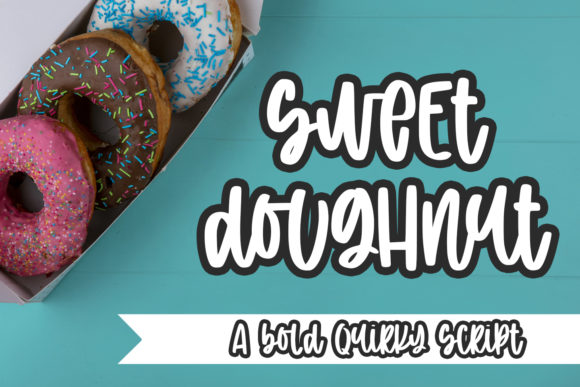
When you first look at Sweet Doughnut, the defining characteristic is its irregular baseline and playful letterforms. Unlike rigid, structured serif fonts or the neutrality of a sans serif font, this handwritten font mimics the natural inconsistency of pen on paper. It has a bouncy quality, where letters seem to dance slightly above and below an imaginary line. This movement creates an immediate sense of friendliness. The strokes are generally monoline or have subtle variations that mimic felt-tip markers or brush pens, making it highly legible for a script font.
The visual weight of Sweet Doughnut is balanced. It does not feel too heavy, which would make it hard to read in paragraphs, nor is it too thin, which would get lost on busy backgrounds. As a premium font, the attention to detail in the kerning—the spacing between characters—allows it to flow naturally. This is crucial for maintaining the "handwritten" illusion. If the spacing is too perfect, it looks robotic; if it is too random, it looks messy. This font strikes a professional balance, making it a versatile asset in a modern typography toolkit.
Where Sweet Doughnut Truly Shines
Understanding where to apply a creative font like this is just as important as liking its look. Because of its casual nature, Sweet Doughnut is not the right choice for body text in a legal contract or a serious financial report. However, its strength lies in display usage. Think about the header of a blog post about a weekend road trip, or the title of a bakery menu. It excels in environments where you want to establish a connection with the audience quickly.
For those involved in packaging design, particularly for artisanal goods, cosmetics, or snacks, this font adds a layer of authenticity. It suggests that a human was involved in the process, which appeals to consumers looking for genuine products. Similarly, in social media graphics, where you have a fraction of a second to stop a user from scrolling, the high-energy vibe of Sweet Doughnut can be the hook. It is equally effective in logo design for brands that position themselves as fun, youthful, or creative.
Strategic Implementation and Font Pairing
Using a bold display font effectively requires strategy. You cannot simply slap it onto a canvas and hope for the best. The key to integrating Sweet Doughnut into your brand identity is contrast. Because it is expressive, it needs a grounding element. This is where font pairing becomes essential. A classic rule of thumb is to pair a script or handwritten font with a clean, geometric sans serif font. For example, using Sweet Doughnut for headlines and a font like Montserrat or Open Sans for the supporting text creates a hierarchy that is easy on the eyes.
This contrast ensures readability. If you use a handwritten font for both the title and the subtitle, the design becomes overwhelming. By using Sweet Doughnut as the accent, you maintain the playful energy while ensuring your message is clear. This approach works well in editorial design, such as magazine layouts or web design hero sections. The handwritten font draws the eye, and the clean font delivers the information.
Practical Considerations for Professional Use
Before fully committing to Sweet Doughnut for a large-scale project, it is vital to evaluate the technical details. As a commercial font, you must verify that the licensing matches your usage. If you are a small business owner creating merchandise like t-shirts or mugs to sell, you need a license that covers physical products. If you are a publisher using it for a book cover, the terms might differ. Always read the End User License Agreement (EULA) provided with the design assets.
Furthermore, test the font across different mediums. A typeface can look beautiful on a high-resolution retina screen but might lose legibility when printed on low-quality paper or embroidered on fabric. Take the time to mock up your designs. How does Sweet Doughnut look in all caps? Often, handwritten fonts struggle with all-caps usage because the uniform height can make the characters look cramped. Check if the font includes alternates or ligatures—special character variations that help the text look more natural by avoiding repetitive shapes.
Enhancing Audience Engagement
The ultimate goal of good design is communication. When you use a font like Sweet Doughnut, you are making a psychological statement. You are telling your audience that your brand is open, creative, and not afraid to show a bit of personality. This can significantly boost audience engagement. People tend to connect more with brands that feel "human." A rigid, standard typeface can sometimes feel cold or distant. In contrast, a creative font invites interaction.
For content creators and bloggers, using this font for section headers or pull quotes can break up the monotony of long-form reading. It provides visual rest points and keeps the reader interested. For marketers, using it in call-to-action buttons or promotional banners can increase click-through rates simply because it feels friendlier than a standard "Buy Now" button in Arial.
Final Thoughts on Versatility
The versatility of Sweet Doughnut is its strongest selling point. It is a tool that adapts to the user's intent. Whether you are designing a wedding invitation, a coffee shop menu, or a YouTube thumbnail, the font provides a solid foundation for a joyful aesthetic. It represents the shift in modern typography towards more expressive, human-centric design. By utilizing this font thoughtfully—pairing it with the right companions and respecting its limitations—you can elevate your projects from generic to memorable. It proves that a premium font is an investment in the visual story you want to tell.