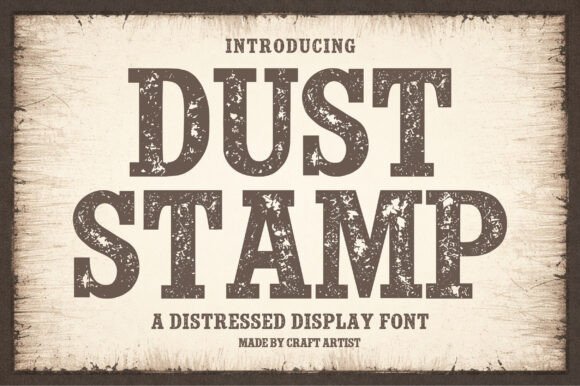
Dust Stamp: The Bold Distressed Typeface for Authentic Design
There’s a certain magic in things that have lived a little. A worn leather jacket, a favorite pair of boots, the faded signage of an old neighborhood shop. They tell a story of use, of history, of character. In the world of typography, that same authentic, lived-in quality is what makes Dust Stamp stand out. This isn't just another display font; it's a design tool with a built-in narrative, perfect for projects that need to feel grounded, real, and impactful.
More Than Just a Rough Texture
At its core, Dust Stamp is a bold distressed display typeface. Its foundation is a set of strong, confident slab serif letterforms. Think of the sturdy, no-nonsense type you'd see on vintage letterpress posters or old industrial labels. But what gives it its soul is the rough, worn texture that overlays every character. Each glyph carries a unique weathered look, as if it were stamped onto paper or carved into wood and then lovingly aged by time. This isn't a uniform, digital grunge filter; it's an organic texture that adds incredible depth and personality.
The overall appeal is one of authentic, timeless character. It evokes a sense of craftsmanship and nostalgia without feeling dated or cliché. For a designer, this means you can instantly inject a sense of history and handcrafted quality into your work. It’s a premium font that does a lot of the heavy lifting for you, providing a strong stylistic foundation that’s both eye-catching and deeply readable at larger sizes.
Where This Vintage-Modern Font Truly Shines
The practical applications for a font like Dust Stamp are wide and varied, spanning both digital and physical realms. Its heavy strokes and textured details make it a natural fit for any project where the headline or primary message needs to grab attention and hold it.
- Logo & Brand Identity: For brands in the craft, outdoor, artisanal food, or heritage goods space, Dust Stamp can become the cornerstone of a brand identity. It communicates authenticity, durability, and a hands-on approach. Imagine it on a coffee roaster's logo, a brewery's tap handle, or the masthead of a rugged apparel line.
- Apparel & Merchandise: This is where the font feels most at home. It’s perfect for t-shirt designs, caps, and tote bags where a vintage, band-poster, or workwear aesthetic is desired. The texture ensures designs look great even when printed on fabric, avoiding the flat, sterile look of some digital fonts.
- Packaging & Labels: On packaging design, Dust Stamp can make a product jump off the shelf. It’s ideal for labels on hot sauce, whiskey, specialty foods, or handmade cosmetics, instantly conveying a story of tradition and quality. Pair it with a clean sans serif font for the finer details to create a beautiful contrast in visual hierarchy.
- Print & Editorial: Use it for poster design, event flyers, magazine headlines, and book covers. It brings an editorial punch and a sense of gritty realism to editorial design, especially for topics like music, history, travel, or adventure.
- Digital & Social Media: In the fast-scrolling world of social media, Dust Stamp is a secret weapon for social media graphics. It creates bold, engaging posts, YouTube thumbnails, and website hero sections that demand a second look. Its strong personality aids in instant brand recognition.
Making Strategic Typography Choices
Choosing the right creative font is about more than just what looks cool. It’s a strategic decision that influences readability, brand perception, and audience engagement. Dust Stamp excels as a display font. Its job is to headline, to shout, to set the tone. Using it for long paragraphs of body copy would be a mistake, as the intricate texture could reduce readability at small sizes. Instead, think of it as your project’s charismatic frontman.
A key part of using it effectively is font pairing. Its bold, textured nature calls for a cleaner companion. Try pairing it with a simple, geometric sans serif font for a modern contrast, or with a elegant script font for a more nuanced, artisan feel. Avoid pairing it with other highly decorative or handwritten fonts, as the designs will compete and create visual noise. The goal is to let Dust Stamp command the spotlight while its partner provides clarity for supporting text.
A Practical Guide to Using Dust Stamp
Before you commit to any commercial font, it’s wise to do a quick evaluation. With Dust Stamp, start by examining the included character set. Does it have the punctuation, numerals, and language support you need for your project? Test it in context. Mock up your logo, your poster headline, or your social media banner. See how the texture interacts with your chosen color palette and background. Does it maintain its impact?
Consider the mood you’re setting. Dust Stamp leans heavily into a retro, grunge, or vintage aesthetic. If your project is ultra-modern, minimalist, or corporate, this might not be the right fit. But if you’re aiming for something with soul, history, and a bit of an edge, it’s a powerful choice. It’s a design asset that can define the entire visual direction of a campaign or product line.
Finally, always review the licensing. As a premium font, it comes with specific terms for use, whether for personal projects, commercial client work, or for products you intend to sell. Understanding this ensures you’re using the font professionally and legally.
In the end, Dust Stamp is more than a collection of letters. It’s a catalyst for storytelling. It helps you build a brand identity